
Practical Digital Marketing Course in Chennai
Learn how to build a website, improve its content and plan marketing campaigns. DIGR’s digital marketing course brings together SEO, Google Ads, Meta Ads, WordPress, social media marketing and AI tools through explanations and practical exercises.
Start with the fundamentals and understand how each subject connects with the work of promoting a business online.


Understand Digital Marketing from Planning to Performance
Before you begin promoting a business, you need to understand its audience, what it offers and what it wants to achieve. These decisions help you choose suitable marketing channels and prepare a message that makes sense to potential customers.
At DIGR, the course connects these fundamentals with practical tasks. You will learn how to organise website pages, research search terms, prepare content, plan advertisements and interpret reports.
The aim is to help you understand the purpose behind your work. When you choose a keyword, write an ad or review a result, you should be able to explain your decision and identify what needs further attention.
Who Can Join?
Build an understanding of digital marketing and explore the tasks involved in different roles.
Develop skills that support your current responsibilities or help you explore another area of work.
Understand your website, advertising and content so you can make more informed marketing decisions.
Learn the practical work involved in delivering digital marketing services and explaining that work to a client.
What You Will Learn
Learn to define a goal, consider the customer’s journey and choose suitable measures of progress. Discuss how an enquiry, a purchase and a social media interaction represent different actions.
Practise working with WordPress themes, plugins, images and enquiry forms. Consider mobile usability, basic website maintenance and the steps visitors take before contacting a business.
Explore local SEO and responsible approaches to earning links. Practise reviewing a page and use Google Search Console to understand the information available about its search performance.
Consider how the same subject may need different treatment on a website, in an advertisement or on social media. Practise editing for clarity, accuracy and a clear next step.
Understand the relationship between an advertisement and its landing page. Learn why conversion tracking matters and how campaign reports can help you identify questions to investigate.
Practise preparing ad ideas and matching them with an enquiry or purchase journey. Understand the difference between receiving a lead and finding out whether that lead is relevant to the business.
Discuss responding to comments and enquiries, maintaining a consistent message and using platform insights to review audience response.
Explore events, enquiries and other meaningful actions. Practise reading reports, recognising gaps in the available information and explaining what you would check next.
Discuss contact organisation, unsubscribe options and the limitations of individual email metrics when assessing performance.
Review generated material for unsupported claims, errors and irrelevant wording. Understand why confidential information requires care and why the final work still needs your judgement.
Put the Lessons to Work
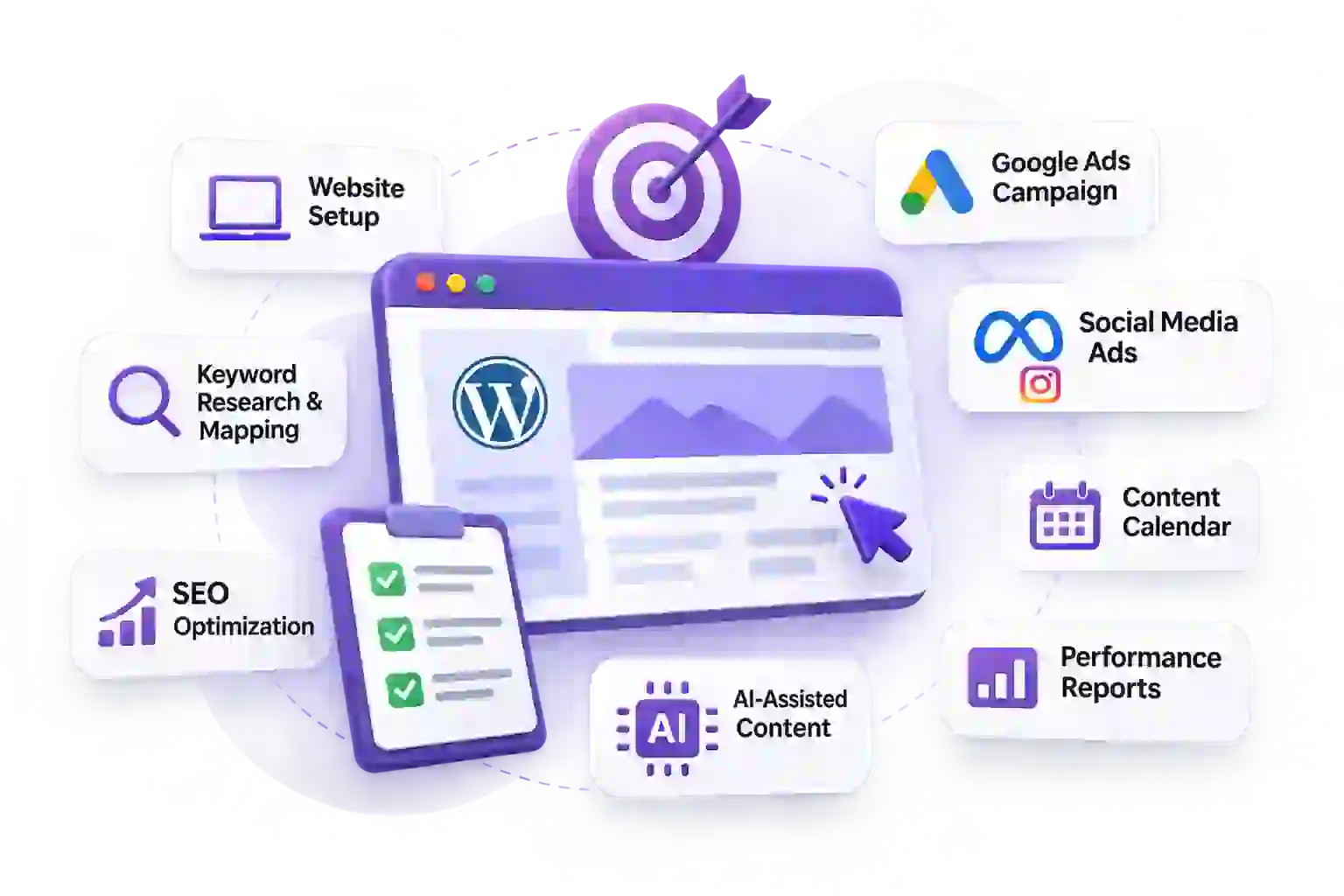
Practical exercises help you connect a concept with the decisions involved in using it. Across the course, the work can include:
- Planning a small business website and its main pages.
- Creating or editing a page in WordPress.
- Preparing a keyword map for selected website pages.
- Reviewing a page’s SEO and prioritising improvements.
- Drafting a Google Ads campaign plan.
- Preparing Facebook or Instagram ad concepts.
- Building a social media content calendar.
- Reading a report and writing a short performance summary.
- Checking and improving an AI-assisted draft.
How the Training Works

Understand the concept
Begin with an explanation of the task, the terminology and the business need behind it.
Practise the task
Make your own decisions and work through an exercise. Note the steps you find difficult or need to investigate.

Follow an example
See how the concept applies to a website, content plan, advertisement or report.

Review your work
Discuss the choices you made, check the result and identify improvements.

What You Will Work Towards
By completing the lessons and practising the tasks, you will work towards being able to:
- Explain the role of the main digital marketing channels.
- Plan a website structure around visitor needs.
- Identify basic content and SEO improvements.
- Prepare advertising ideas around a defined objective.
- Organise social media content for a business
- Interpret basic marketing reports.
- Use AI tools with appropriate checking and editing.
- Present your work and explain your recommendations.
Your progress will depend on your starting point, participation and practice. Exercises can also provide material for a learning portfolio when clearly labelled as practice work.
Learn with Dakshinamoorthy Siva
Dakshinamoorthy Siva is a digital marketing consultant whose work includes websites, SEO, content and marketing campaigns.
At DIGR, his teaching approach connects these areas with practical tasks. The emphasis is on understanding what you are doing, why it matters and how to review your work.

Discuss the Course Before You Enrol
Contact DIGR for the current course duration, batch timings, teaching language, learning format and fees.
Share your experience, the subjects you want to learn and the time you can spend practising. Before enrolling, confirm the syllabus, equipment requirements, any additional tool costs and the support included in your programme.
Questions About the Digital Marketing Course
Use this space to provide your website visitors with a brief description on what to expect before clicking on a section title.
Overline
Start with a Clear Learning Plan
Tell us what you want to learn and where you would like to apply it. We can discuss the digital marketing course and help you understand whether it suits your goals.