
Practical Google Ads Training in Chennai

Learn how to plan Google Ads campaigns, research keywords, write advertisements and review their performance. 

DIGR’s Google Ads training connects the basics of paid search with practical campaign exercises. Understand how advertising goals, budgets, landing pages and conversion tracking work together before spending money on a campaign. 

google ads training in chennai
Google Ads campaign management illustration showing keyword research, campaign setup, audience targeting and conversion tracking

Learn What Goes into a Paid Search Campaign 

An advertising campaign starts with a business question: what do you want people to do after seeing your ad? 
The answer could be requesting a quotation, booking an appointment or purchasing a product. That goal influences the keywords you choose, the message you write and the page visitors reach. 
Our Google Ads course helps you work through these decisions. Learn how to organise a campaign, prepare relevant advertisements and understand the information in its reports. 
For example, an advertisement may attract clicks but few useful enquiries. Before changing the budget, you need to investigate the searches, the offer, the landing page and the tracking. The training helps you approach these questions systematically. 

Who Can Join? 

What You Will Learn 

Google Ads Fundamentals 
Understand the role of paid advertising and how it differs from unpaid search visibility. Explore the relationship between a search, an advertisement and a landing page. Learn common terms such as impressions, clicks, cost per click and conversions. Discuss why a campaign’s success should be assessed against its business purpose rather than a single platform metric.
Learn how to turn a business requirement into an advertising brief. Identify the offer, audience, service area and action you want a visitor to take. Consider whether the website is ready to receive paid traffic. Prepare a campaign plan that explains your assumptions, budget considerations and measurement needs.
Business Goals and Campaign Planning 
Keyword Research and Search Intent
Research how potential customers search for a product or service. Use Keyword Planner to explore ideas and estimates, while recognising that forecasts are not guaranteed results. Group keywords around related needs. Distinguish searches that suggest someone is ready to enquire from those mainly seeking information, employment or unrelated products.
Understand broad, phrase and exact match, including why matching involves meaning and intent rather than only identical wording. Learn how negative keywords can help exclude unwanted searches. Practise reviewing sample search terms and deciding which are relevant, which need further investigation and which should be excluded.
Match Types and Negative Keywords
Campaign Structure and Targeting
Learn the relationship between an account, campaigns, ad groups, keywords and ads. Organise campaigns around meaningful differences such as services, goals or locations. Explore location and language settings and consider how targeting choices relate to the people a business can actually serve.
Practise writing headlines and descriptions that communicate an offer clearly. Prepare messages that remain accurate and understandable in different combinations. Explore supporting assets such as sitelinks, callouts and structured snippets. Match the advertisement with its destination page and avoid claims the business cannot substantiate.
Responsive Search Ads and Assets
Budgets and Bidding
Understand the difference between a campaign budget and a bidding strategy. Explore bidding concepts connected with clicks, conversions and conversion value. Discuss how objectives, tracking quality and available data affect your decisions. Practise preparing a budget proposal with clear assumptions instead of promising a fixed number of leads.
Review what happens after someone clicks an advertisement. Does the landing page answer the searcher’s question? Is the offer clear? Can the visitor contact the business easily?
Learn to assess headings, supporting information, forms, mobile usability and calls to action. Check whether the page supports the promise made in the ad.
Landing Pages and Enquiry Journeys
Conversion Tracking Fundamentals
Learn to define the actions that matter to a campaign, such as a completed enquiry or purchase.
Explore the roles of Google Ads conversion tracking, Google Analytics 4 and Google Tag Manager. Discuss testing, duplicate measurement and the difference between a button click and a successfully submitted enquiry. Understand why a campaign needs reliable measurement before its reported results can be interpreted confidently.
Learn to read campaign, keyword and search-term reports. Compare spend, clicks and recorded conversions while considering the time period and amount of data available. Practise identifying a problem, suggesting an explanation and deciding what evidence would help test it. Develop the habit of recording changes so that later reviews have useful context.
Campaign Reports and Optimisation
Automation and AI-Assisted Work
Explore how automation supports bidding and ad delivery. Learn to review recommendations in relation to the campaign’s goals and constraints. Use AI tools to assist with initial ad ideas and planning questions, then check the output for accuracy, relevance and unsupported promises. Understand why automated suggestions still need informed review.
Build an introductory understanding of Display, video, Shopping and Performance Max campaigns, including their different creative and measurement requirements. Search advertising remains the core practical focus of this course. Confirm the depth of other campaign types in the current course outline before enrolling.
Introduction to Other Campaign Types

Prepare Campaign Work You Can Explain 

Practical exercises help you connect the lessons with advertising decisions. These can include: 

  • Writing a campaign brief for a sample business. 
  • Preparing keyword groups and a negative keyword list. 
  • Planning campaigns and ad groups. 
  • Drafting responsive search ad headlines and descriptions. 
  • Choosing relevant supporting assets. 
  • Reviewing a landing page and enquiry form. 
  • Preparing a conversion measurement plan. 
  • Analysing sample search-term and performance reports. 
  • Writing recommendations for a campaign review.

Planning and reporting exercises can be completed without launching paid advertising. Any live campaign activity requires separate agreement on access, spending and responsibility. 

Google Ads campaign planning illustration showing campaign brief, keyword groups, ad copy, landing page and conversion tracking
Google Ads search campaign planning illustration showing campaign objectives, keyword targeting, ad structure, budget and performance tracking

Build a Search Campaign Plan 

Bring your learning together by preparing a campaign for an agreed business scenario. 
For example, a local service business may want quotation requests from customers within its service area. Your task is to connect that goal with appropriate searches, relevant advertisements and a clear enquiry page. 

Your project should include: 

  • A business brief and campaign objective. 
  • Proposed targeting and campaign structure. 
  • Keyword groups and negative keyword considerations. 
  • Ad copy and supporting assets. 
  • Landing page recommendations. 
  • Budget assumptions and measurement requirements.
  • A plan for reviewing performance. 

Understand the Decisions Behind the Campaign 

Through lessons and practice, you will work towards being able to: 

  • Translate a business requirement into an advertising brief. 
  • Research and organise relevant keywords. 
  • Write clear advertisements that match an offer. 
  • Identify gaps in a landing page or enquiry process. 
  • Explain budget and bidding considerations. 
  • Recognise basic conversion measurement issues. 
  • Interpret reports and prepare reasoned recommendations. 

The aim is to develop your judgement alongside your familiarity with the platform. Completing a task is more useful when you can explain its purpose and limitations. 
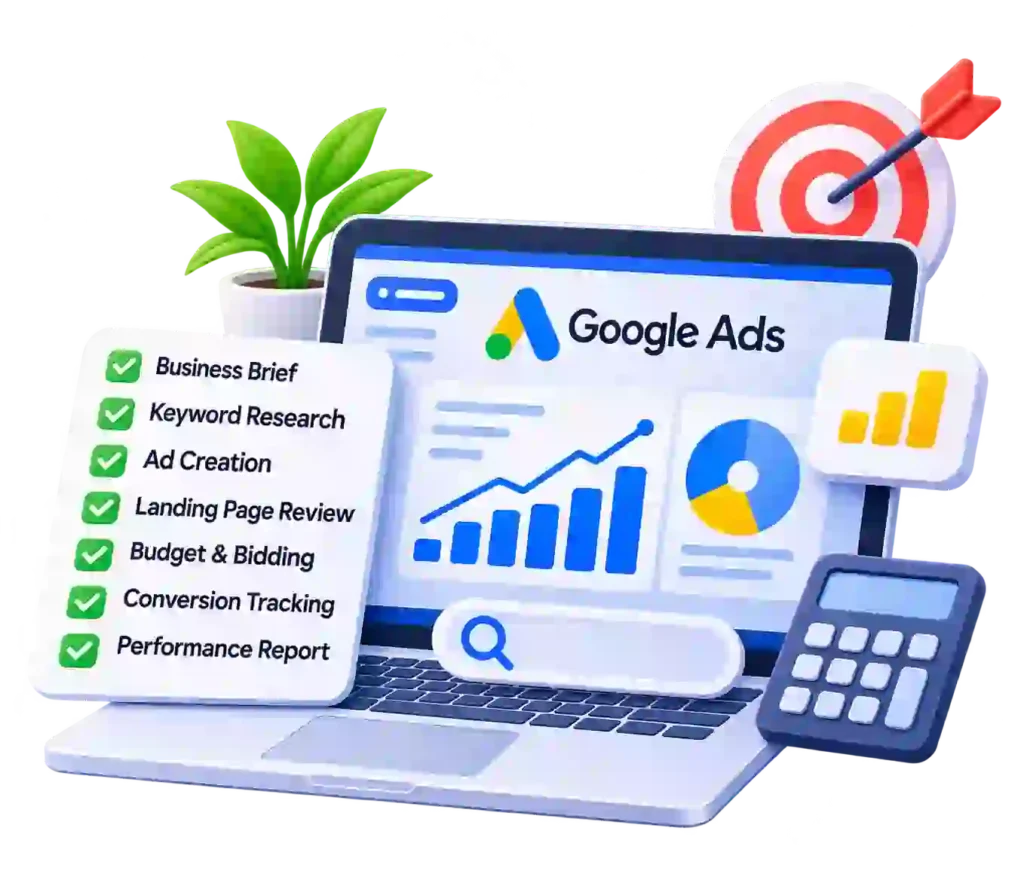
Google Ads campaign analysis illustration showing keyword research, ad performance, budget planning, conversion tracking and reporting

Learn with Dakshinamoorthy Siva 

Dakshinamoorthy Siva is a digital marketing consultant whose work includes websites, content and marketing campaigns. 
At DIGR, his teaching approach connects marketing concepts with practical tasks. Learners are encouraged to ask questions, explain their decisions and review the work they prepare. 

Ask About Fees and Upcoming Batches 

Contact DIGR for the current course duration, fees, class timings, teaching language and available learning format. 
Before enrolling, confirm the syllabus, practice arrangements and any additional costs. Advertising spend is separate from learning how to plan a campaign and should never be assumed to be included in the course fee. 

Questions About Google Ads Training 

Use this space to provide your website visitors with a brief description on what to expect before clicking on a section title.

Yes. The course begins with advertising fundamentals before moving into campaign planning and reporting. Basic familiarity with computers, websites and spreadsheets will help. 

Google AdWords is the former name of Google Ads. Older learning materials may use that name, but this course uses Google Ads terminology. 

Not for planning exercises. If live advertising is part of an agreed activity, the account owner must approve the budget and understand the charges before launch. 

Not for planning exercises. If live advertising is part of an agreed activity, the account owner must approve the budget and understand the charges before launch. 

Conversion measurement is part of the proposed syllabus. It covers choosing meaningful actions, understanding the tools involved and checking the quality of reported information. Confirm the extent of hands-on implementation in your batch. 

This page describes Google Ads training. Facebook and Instagram advertising are covered under DIGR’s separate Meta Ads topic. Ask about the complete digital marketing programme if you want to study both. 

Completing DIGR training does not automatically grant a Google certification. Ask separately about any DIGR completion certificate and whether preparation for Google’s own assessments is included. 

No. Advertising results depend on the offer, competition, budget, targeting, website and other factors. The course focuses on planning and reviewing campaigns responsibly, without promising a fixed outcome. 

No. Advertising results depend on the offer, competition, budget, targeting, website and other factors. The course focuses on planning and reviewing campaigns responsibly, without promising a fixed outcome. 

Learn to Plan Advertising with a Clear Goal